
Written by Nana Aba Appiatewaa

Have you ever felt the irresistible pull of a beat so vibrant it sweeps you off your feet and carries you to another world? In Ghana, music is more than just sound—it’s the soul of the culture, the lifeblood of celebration, and the essence of joy. It’s a living, breathing story, where every drumbeat and melody whispers tales of the past and dreams of the future. Here, rhythm isn’t just heard; it’s felt, shared, and celebrated, inviting you to lose yourself in a dance that connects you to something magical, timeless, and beautifully larger than life.
Whether it’s the call of the Kpanlogo drum or the electrifying beats of Hiplife, Ghana’s music and dance scenes promise an unforgettable adventure for any traveler. In Ghana, every rhythm tells a story. Traditional music is rooted in rituals and celebrations, often performed with drums, flutes, and vocals that stir the soul. It’s a connection to the ancestors, a keeper of history. Picture yourself standing under the stars in a coastal village near Accra, where the Kpanlogo drum leads an impromptu dance circle. This traditional Ga music form is playful, energetic, and deeply symbolic of Ghanaian joy and resilience.

Imagine this: You’re in Accra, the sun has dipped below the horizon, and the city’s vibrant nightlife is waking up. Somewhere in the distance, the unmistakable beat of Kpanlogo drums begins to stir. It’s playful yet commanding, a rhythm born from the Ga people’s deep cultural roots. Before you know it, you’re drawn into a circle of dancers whose movements feel both ancient and alive. Their feet tell stories of resilience, their hands invite you to join the dance, and in that moment, you’re not just an observer, you’re connected to the rhythm of Ghana. So hey, if you’re in Accra, make your way to the W.E.B. Du Bois Center or cultural hubs like the Jamestown Cafe. These spots regularly host drumming and dance workshops, where you can learn to play and move to these ancestral rhythms.
Over time, traditional sounds have blended with global influences to create genres that are uniquely Ghanaian. Even though music here has evolved with the times, we raise our heads high for holding onto its roots still.

Highlife, the grandfather of Ghanaian popular music, emerged in the early 20th century with its infectious blend of brass instruments and African melodies and has paved the way for hiplife, Afrobeat, and Afro-fusion.. By the late 1990s, hiplife, a fusion of highlife and hip-hop, took over, with artists like Reggie Rockstone and Obrafour leading the charge. Other contemporary genres, carried by global icons like Sarkodie and Gyakie, are as much a reflection of modern Ghana as they are an homage to its past. Clubs and live venues across the country pulse with these sounds, where every bass drop and lyric carry the promise of a night to remember.
But it’s not just about listening, it’s about movement, too. Ghanaian dances are as diverse as its regions, each one a celebration of identity and heritage. From the elegant Adowa performed at traditional ceremonies to the energetic Azonto that became a global sensation, these dances are more than just steps, they’re expressions of life too.
So if you’re visiting Kumasi, join a cultural dance class at the Centre for National Culture. Or, if you’re in Accra, seek out urban dance groups offering Azonto workshops. By the end of the session, you’ll find yourself breaking into the moves at every beat drop. And the truth is, whether you’re at a cultural workshop in Kumasi or improvising on the beach in Cape Coast, the joy, I bet you, is unremarkable.
While December in Ghana, popularly dubbed “Detty December” may be known for its festivals and nightlife, the magic doesn’t end with the holidays. January brings quieter but equally rich opportunities to immerse yourself in the country’s rhythm. Picture yourself at an Afrobeat festival in the vibrant streets of Accra or exploring Cape Coast, where drumming echoes through the historic forts. The Kwahu Paragliding Festival later in the year is another unmissable experience, with traditional drummers and dancers creating a lively backdrop to this breathtaking event.
There’s something transformative about music and dance in Ghana. It’s not just something you watch or listen to, but something you feel, something you live. It’s an open invitation to laugh, sweat, connect, and let go. It’s a reminder that in this corner of West Africa, life is celebrated not in whispers but in bold, unapologetic rhythms.
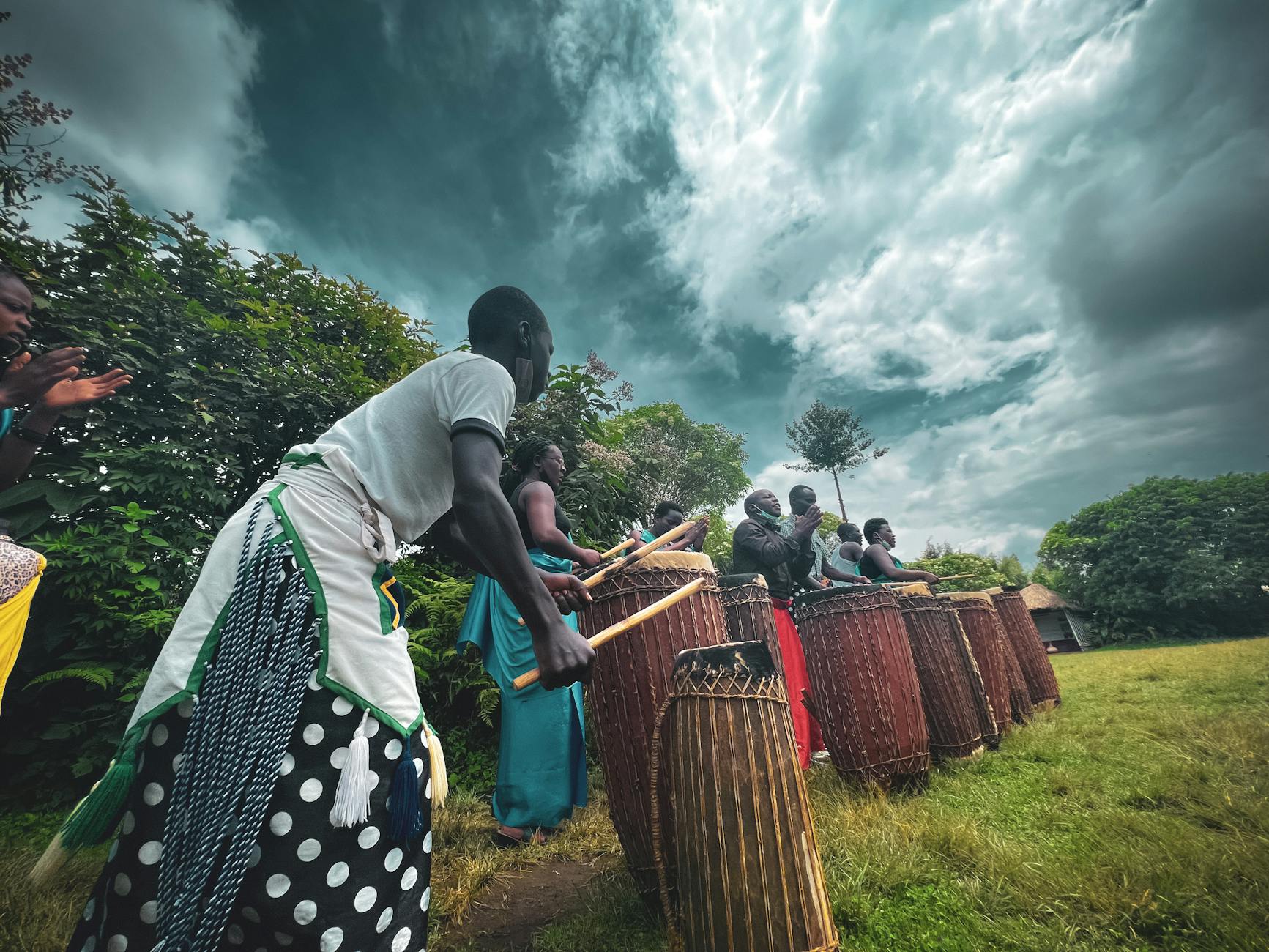
If you’re dreaming of your next adventure, let Ghana’s music and dance lead the way. Come with an open heart, ready to move to the rhythms that ignite your soul, listen to melodies that tell centuries-old stories, and feel the vibrant energy of a culture that celebrates life at every turn. Once you step into this world of rhythm and connection, you won’t just visit Ghana—you’ll carry its heartbeat with you forever.
As Always Thank You for Reading My World, My Vision, My Adventure!
Don’t forget to Subscribe, Follow, and Like my Pinterest, Facebook, Instagram pages. Until next time Happy Traveling!
 AllThingsBiola